An in-depth technical look at why ASTM A537 Class 2 quenched-and-tempered steel plate has become the material of choice for API 650 mega-tank projects across the Middle East — from the Kuwait Mega Storage Tanks to the Mina Al-Ahmadi expansion.
1. The Challenge: Scaling Up Crude Storage
As global energy infrastructure expands, crude oil storage tanks have grown from modest 500,000-barrel units to massive >1,000,000-barrel structures. A single mega-tank can stand over 20 meters tall with a diameter exceeding 100 meters. The bottom shell courses of these tanks bear immense hydrostatic pressure — requiring steel that combines high strength, excellent toughness, and reliable weldability in thicknesses ranging from 30 mm to over 60 mm.
Standard structural steels like A36 or S355 simply cannot deliver the required strength-to-thickness ratio at these scales. This is where A537 CL2 enters the picture.
2. What Makes A537 CL2 Different
ASTM A537 Class 2 is a heat-treated carbon-manganese-silicon steel plate produced by quenching and tempering (Q&T). The Q&T process creates a fine-grained martensitic microstructure that delivers:
- Yield strength ≥ 415 MPa (60 ksi) — significantly higher than as-rolled structural steels
- Tensile strength of 550–690 MPa (80–100 ksi) — enabling thinner shell designs that reduce total steel weight and welding costs
- Excellent notch toughness — Charpy V-notch values typically exceeding 50 J at -20°C, critical for tanks operating in ambient and low-temperature environments
- Superior through-thickness properties — when specified with Z-quality (Z25/Z35), the steel resists lamellar tearing in highly restrained welded joints
3. The API 650 Design Framework
API 650 is the global standard for welded steel oil storage tanks. Its design philosophy is a variable-design-point method that calculates shell plate thickness course by course — thicker at the bottom where pressure is greatest, thinner toward the top. The standard permits the use of high-strength steels to reduce overall shell thickness, with A537 CL2 being the most widely adopted quenched-and-tempered grade for the critical lower courses.
In a typical 1-million-barrel crude tank, the bottom two to three shell courses (out of eight to ten total) are often specified in A537 CL2 with thicknesses of 35–55 mm. The upper courses transition to lower-cost grades like A573 Gr.70 or A36, optimizing the material cost while maintaining structural integrity.
4. Complementary Grades: A573 Gr.70 and A516 Gr.70
A full tank plate package rarely uses a single grade. A537 CL2 is paired with complementary materials:
- A573 Gr.70 — an improved-toughness carbon steel for tank bottoms, roofs, and upper shell courses. Offers good weldability at lower cost than A537 CL2
- A516 Gr.70 — for tanks storing products at elevated temperatures or where pressure vessel code compliance is required
A mill capable of supplying the full package — A537 CL2 + A573 Gr.70 + A516 Gr.70 from a single source — eliminates the complexity of multi-supplier qualification and logistics coordination.
5. Mill Capability: What Separates the Leaders
Producing A537 CL2 in heavy gauges (40–60 mm) and wide formats (2,400–3,200 mm) demands specific mill capabilities:
- Reversing plate mill — capable of controlled rolling with high reduction ratios per pass to achieve fine grain refinement before heat treatment
- Quenching facility — roller-quench type providing uniform and rapid cooling across the full plate width, minimizing distortion and residual stress
- Tempering furnace — precise temperature control (±10°C) to achieve the target strength-toughness balance without over-tempering
- Ultrasonic testing — 100% UT per ASTM A578 Level C is standard for A537 CL2 tank plates; the mill must have automated UT equipment capable of handling plates up to 3.2 m wide
- PWHT capability — post-weld heat treatment simulation testing (coupon testing per ASME Section VIII) to demonstrate that mechanical properties are maintained after vessel fabrication stress relief
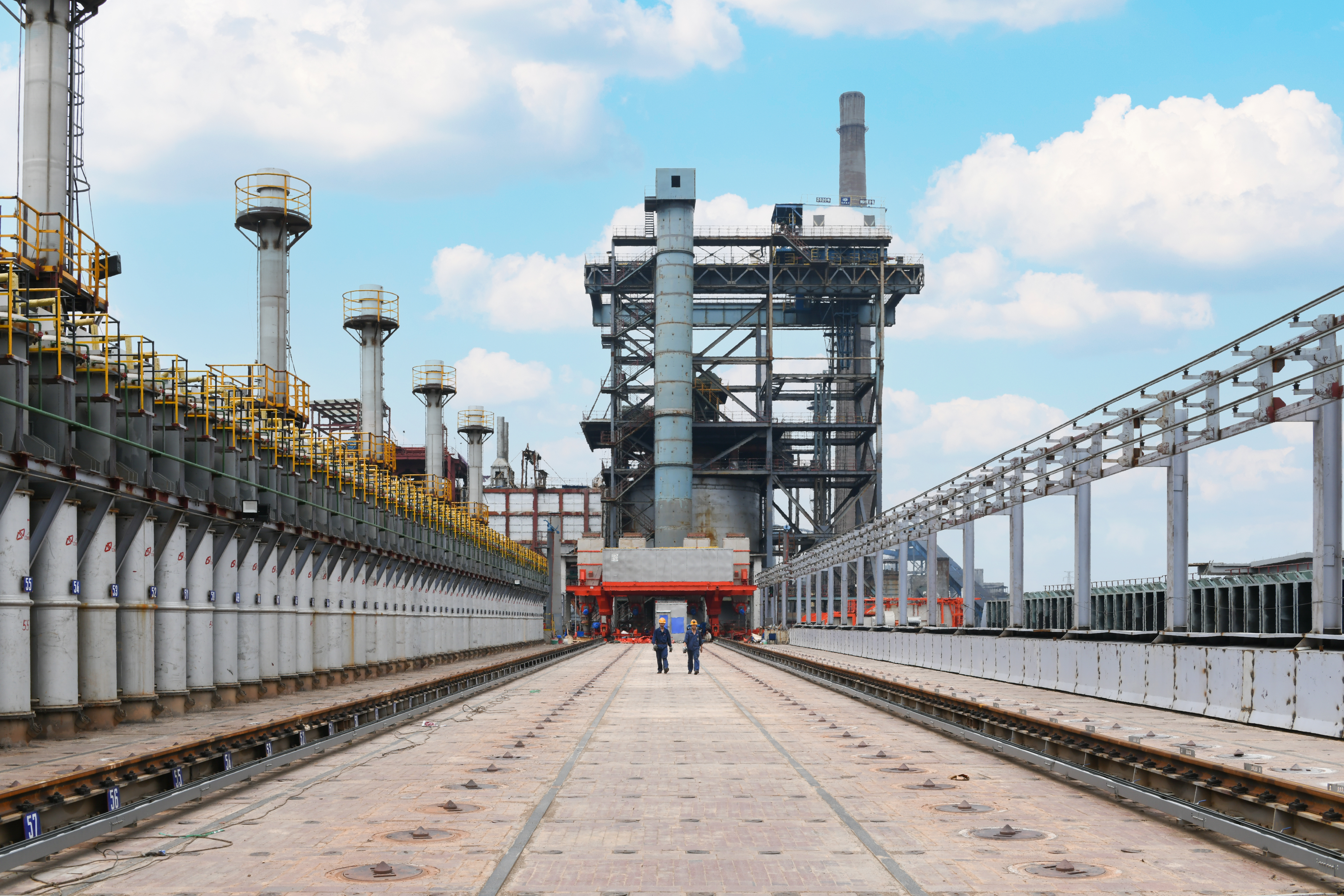
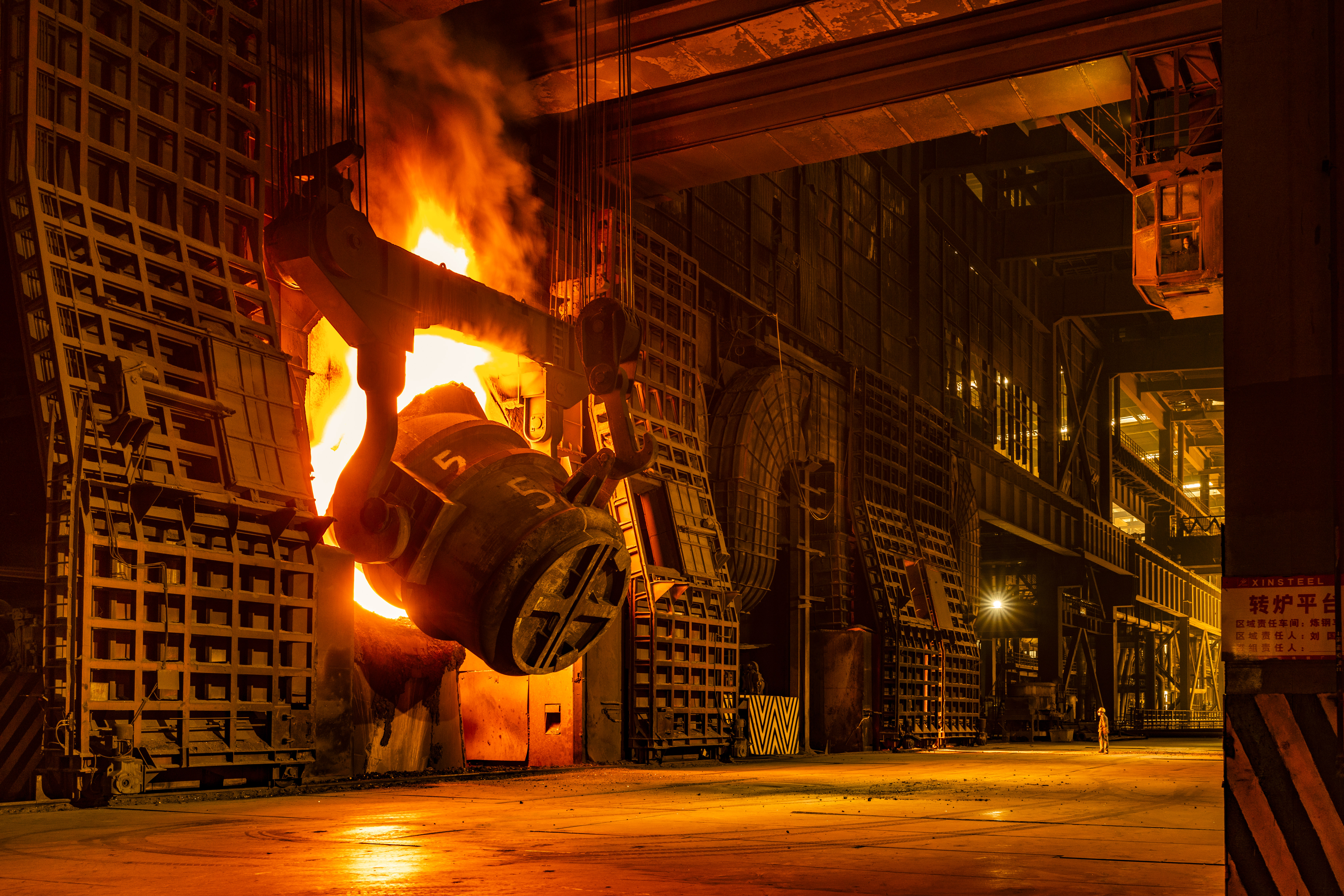
Baowu Xinsteel operates a 3,800 mm four-high reversing plate mill with an integrated roller-quench and tempering line — one of the widest and most capable in China — routinely supplying A537 CL2 tank plates to Middle East EPC contractors and fabricators.
6. Middle East Demand Drivers
The GCC region is experiencing unprecedented investment in crude storage capacity:
- Kuwait — KOC Mega Storage Tanks program (>100,000 bbl per tank), with multiple phases requiring tens of thousands of tons of A537 CL2 plate
- Saudi Arabia — Aramco's strategic storage expansion under Vision 2030, including new tank farms at Ras Tanura and Yanbu
- UAE — Fujairah storage hub expansion, ADNOC underground storage in the Hajar mountains
- Oman — Ras Markaz crude oil park, designed as the largest commercial crude storage facility in the Middle East outside the Strait of Hormuz
These projects share a common requirement: reliable, certified A537 CL2 plate from mills with proven track records. Lead times for 40–55 mm quenched-and-tempered plate average 8–12 weeks from order confirmation to FOB, making advance procurement planning essential for EPC schedules.
7. Key Considerations for Buyers
When specifying A537 CL2 for tank projects, procurement teams should address these points early in the RFQ process:
- Supplementary requirements — Does the project require HIC (hydrogen-induced cracking) testing per NACE TM0284? HIC-resistant A537 CL2 adds approximately $30–50/t to the base price and extends delivery by 2–3 weeks
- Z-direction properties — For highly restrained T-joints in the shell-to-annular connection, specify Z25 or Z35 through-thickness reduction-of-area requirements per EN 10164 or ASTM A770
- PWHT simulation — If the fabricator will perform post-weld heat treatment, require mill-furnished simulated PWHT test coupons (typically 620°C × 8 hours) to demonstrate retained properties
- Certification package — Beyond the standard EN 10204 3.1 certificate, many GCC projects require 3.2 certification with third-party inspection (TPI) by Bureau Veritas, SGS, or Lloyds Register
- Dimensional tolerances — API 650 tank construction is sensitive to plate flatness and camber. Specify EN 10029 Class N or better for thickness tolerance, and a maximum 3 mm/m flatness deviation
8. Conclusion: One Supplier, Full Package
The most efficient path for tank fabricators and EPC contractors is to source the complete plate package — A537 CL2 for lower shell courses, A573 Gr.70 for bottoms and roofs, A516 Gr.70 for pressure boundaries — from a single qualified mill. This approach eliminates redundant qualification, streamlines logistics, and provides a single point of accountability for material certification.
Baowu Xinsteel, with a 3,800 mm reversing plate mill, integrated heat treatment, and a 60-year track record in pressure vessel and structural steel, is positioned to serve as that single-source partner for the next generation of Middle East tank projects.